
Smoke and CO alarms are one of those compliance areas that most landlords think they’ve got sorted — until something prompts them to look more closely and they realise they’re not quite sure what the rules actually say. Or they’re sure they’re compliant, but they’ve got nothing in writing to show for it.
That second part matters just as much as the first. If a tenant complains, a council investigates, or a dispute escalates, “I’m pretty sure there was an alarm” is not a useful position to be in. A photo, a signed check-in note, and a receipt take about ten minutes to sort, and they’re worth a lot.
This post covers the legal requirements in plain English, a straightforward checklist, and the paperwork worth keeping.
This is general guidance for landlords in England, not legal advice.
What the law currently requires
The rules are set out in the Smoke and Carbon Monoxide Alarm (England) Regulations 2015, updated in 2022. The government publishes a landlord Q&A booklet on this, which is worth bookmarking.
Smoke alarms
You need at least one smoke alarm on every storey of the property that contains a room used as living accommodation. This has applied to private rented properties since 2015.
Carbon monoxide alarms
You need a CO alarm in any room used as living accommodation that contains a fixed combustion appliance — a boiler, a gas fire, a log burner, an oil heater, that kind of thing. Gas cookers are explicitly excluded from this requirement.
Testing at the start of a new tenancy
For new tenancies, you must check — or have someone check on your behalf — that every required alarm is working on the day the tenancy begins. Not the day before, not the week before. The day it starts.
Responding to faults
If a tenant tells you an alarm is faulty and that turns out to be the case, you must repair or replace it. There’s no fixed timeframe in the regulations, but acting quickly is both the legal expectation and the sensible approach.
Penalties
Local authorities enforce these rules. If they serve a remedial notice and you don’t comply, they can impose a civil penalty of up to £5,000.
A practical checklist for each property
Work out how many storeys need a smoke alarm
Count every storey that has living accommodation — ground floor, first floor, and any loft conversion or basement that’s used as living space. Each of those needs at least one smoke alarm. One per storey is the legal minimum; plenty of landlords fit more in higher-risk areas, particularly in HMOs, but the regulations set the floor, not the ceiling.
Identify which rooms need a CO alarm
Walk through the property and note any room used as living accommodation that contains a fixed combustion appliance. Gas boiler in the kitchen or utility room, gas fire in the lounge, log burner in the living room — all of those need a CO alarm. A gas cooker on its own does not.
Choose alarm types you can actually maintain
The regulations don’t specify a power source, so the choice is yours. Most landlords go for either sealed 10-year battery alarms (low maintenance, no wiring) or hardwired alarms (more common in HMOs and newer builds). Whatever you choose, the job is making sure they’re present and working when they need to be.
Test on the first day of every new tenancy
Do this at the check-in appointment with the tenant present. Test each alarm, confirm it works, photograph it, and note it on the inventory. It takes a few minutes and gives you solid evidence if the question ever comes up later.
Sort fault reports quickly
When a tenant reports a faulty alarm, acknowledge it promptly, get it replaced, and keep a record: their message, your reply, and the replacement receipt. That trail is what protects you if a council ever gets involved.
Where to put the alarms
The regulations don’t prescribe exact positions, but the guidance says they should be installed in a way that effectively protects tenants. In practice, smoke alarms are typically installed in circulation spaces — hallways and landings — on each storey. CO alarms go in the room that contains the combustion appliance, positioned according to the manufacturer’s instructions.
That last point is worth noting: if you ever have to explain your installation to a council or in a dispute, “positioned in accordance with manufacturer guidance” is a clean, defensible answer.
The paperwork worth keeping
Compliance is doing the right thing. Provable compliance is doing the right thing and being able to show it. For each property, keep a folder — physical or digital — with the following:
An alarm inventory
A simple list covering: alarm type (smoke or CO), make and model, location (e.g., “first floor landing ceiling”), install date, battery life if it’s a sealed unit, and replacement date if you’ve swapped one out. One page per property is enough.
Dated photos
A photo of each alarm — one showing where it is in the room, one close-up — taken at the start of each tenancy. This doesn’t need to be elaborate. A quick album on your phone, saved against the property, is fine. The point is evidence.
A signed check-in note
Add a line to your check-in form: “Smoke and CO alarms tested on [date] and confirmed working.” Have the tenant sign or initial it. This is particularly useful if a tenant later claims the alarms weren’t there or weren’t working when they moved in.
Purchase and installation receipts
Keep receipts for the alarms themselves, and invoices if a contractor fitted them.
A fault report trail
If a tenant reports a faulty alarm, keep their message, your reply, any appointment notes, and the replacement receipt or a photo of the new alarm. If a council investigates, this is the evidence that you acted.
A simple check-in routine
On the first day of a new tenancy, at the check-in appointment:
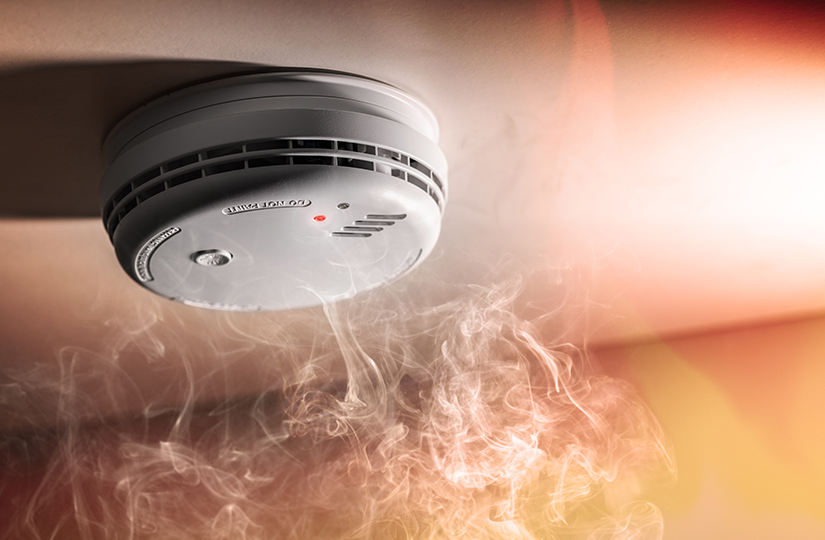
- Walk the tenant to each alarm
- Press the test button — or have them do it
- Confirm it sounds
- Photograph each alarm
- Note “tested and working” on the inventory and get a signature
Five minutes. Meets the legal requirement. Gives you a paper trail. Worth doing every time.
What counts as a “new tenancy”?
The day-one testing requirement applies when a new tenancy begins. In practice, the safest approach is to treat any new tenant moving in, any new agreement starting, or any significant occupancy change that requires a fresh check-in as an opportunity to run the test-and-record routine. It costs five minutes and buys you a lot of protection.
Mistakes that tend to come up
“There’s one smoke alarm somewhere — that should be fine.”
One alarm in the building isn’t enough. You need at least one on each storey with living accommodation. A single alarm on the ground floor doesn’t cover the bedrooms upstairs.
Forgetting CO alarms for boilers and gas fires
Since October 2022, the CO alarm requirement covers all fixed combustion appliances — not just solid fuel. A gas boiler in the kitchen, a gas fire in the lounge: both need a CO alarm in the same room.
Testing “around” the start date rather than on it
The requirement is the day the tenancy begins. Testing during the gas safety visit two days earlier, or the week before, doesn’t meet it. Do it at check-in.
Sitting on a fault report
Once you’re told an alarm is faulty and that’s confirmed, you need to fix it. Leaving it “until next week” is the kind of thing that turns into a council complaint.
No proof
Even if everything was done correctly, having nothing to show for it makes any dispute much harder to resolve. Photos and a signed check-in note are easy to produce at the time and very useful later.
If the council gets involved
Local authorities can serve a remedial notice if they believe you haven’t complied or haven’t taken reasonable steps. If you don’t act within the notice period, they can arrange remedial action and impose a civil penalty of up to £5,000. Landlords can appeal via a tribunal.
The practical lesson is simple: if a tenant raises a concern or a council makes an enquiry, respond quickly, document everything, and close the loop. A landlord who acts promptly and can show the paper trail is in a much stronger position than one who can’t.
The short version
Smoke and CO alarm compliance isn’t complicated. The legal requirements are fairly clear, the actions are straightforward, and the paperwork takes minutes. What usually goes wrong is either not knowing the detail (one alarm per storey, not one per property; CO alarms for boilers, not just log burners; testing on day one, not roughly around then) or not keeping any record of it.
Build it into your check-in routine, photograph it, get a signature, and store it. That’s genuinely most of the work done.