

If you’re a self-managing landlord, eviction timelines can feel like a black box: you do “the right thing,” serve the notice, and then… everything takes forever.
The blunt truth is this: possession is rarely quick, even when you’ve done everything properly. And most delays aren’t caused by one dramatic event—they come from a chain of small steps, each with its own waiting time that adds up faster than you’d think.
Here’s a realistic look at how long evictions in England really take, and the main reasons they drag on.
The headline numbers (so you can set expectations)
Official Ministry of Justice statistics for July-September 2025 show the median time from claim to repossession in landlord possession cases was 46.1 weeks (just under 11 months).
That’s from the court claim being issued, not from the day you first served a notice. So add your notice period on top of that.
From a tenant-facing view, Shelter notes a Section 21 eviction often takes around 8 months, depending on court workload and how quickly the landlord acts.
If you’re thinking, “This could be done in a couple of months,” it’s safer to plan for many months, not weeks. I know—it’s depressing.
The eviction timeline in plain English (the 3 big stages)
1) Notice stage (you serving notice)
This is the part you control most—but it’s also where loads of cases get delayed later because of admin errors that come back to haunt you.
- Section 21 (where available) has a minimum notice period and strict prerequisites
- Section 8 depends on the grounds used, and notice periods vary
If a tenant doesn’t leave at the end of the notice, you still can’t evict. The notice is just the start. You can’t drag them out yourself—that’s illegal.
Also worth knowing: government guidance notes that if a tenant doesn’t leave and you want to start proceedings, you generally must apply to court within a year of giving the notice, or it can expire. So don’t just sit on it hoping they’ll leave.
2) Court stage (claim → order)
Once you apply to the court, you’re in the queue. And it’s a long queue.
Even in the “cleanest” cases, you’ll be waiting for:
- the claim to be processed,
- documents to be checked,
- a hearing date (Section 8 usually),
- a possession order
MoJ stats break timeliness into stages and show just how long this can take in practice. It’s not pretty.

3) Enforcement stage (bailiff/enforcement → repossession)
This is the part that surprises landlords most: obtaining a possession order doesn’t require the tenant to vacate immediately.
If the tenant stays put, you typically need a warrant and an enforcement appointment—and those dates can be weeks (or longer) away depending on local capacity. MoJ statistics show that the “claim to repossession” stage is where timelines really lengthen the most. This is the bit that kills you.
Why evictions take so long (the real causes)
1) Court capacity and backlogs
Possession cases compete for limited court time. Industry bodies such as the NRLA have repeatedly warned that court capacity is already strained and that reforms could pile even more pressure on.
2) The case isn’t as “clean” as it feels
Timelines explode when there’s any dispute around:
- paperwork and compliance,
- dates and service,
- the rent schedule/ledger,
- property condition complaints,
- whether the ground is proved (Section 8)
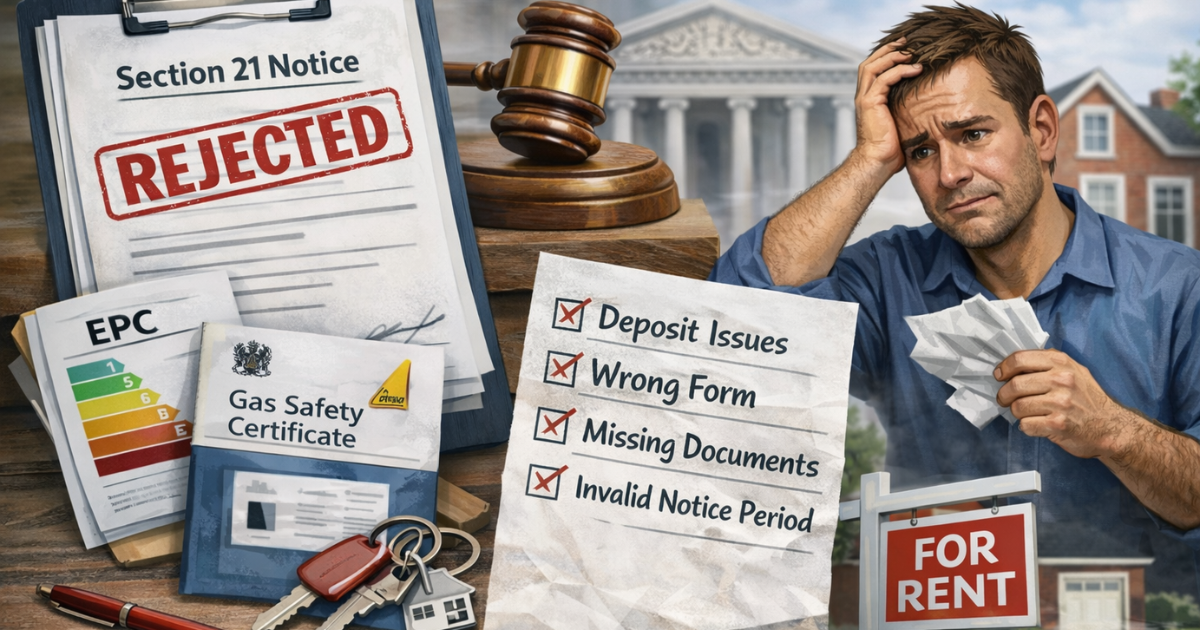
Even a minor slip (wrong date, weak proof of service, missing document) can mean re-serving notices and restarting the entire clock. That’s months gone, just like that.
3) Tenants don’t have to leave until the legal process finishes
This is a common misunderstanding. Shelter is clear that eviction involves multiple steps, and tenants generally don’t have to vacate until those steps are complete. You can’t skip stages just because you’re frustrated.
4) Section 8 needs evidence and sometimes hearings
Section 21 (where available) can be more “paperwork driven.” Section 8 is often more “argument plus evidence-driven,” which adds time—especially if the tenant actually defends. And some do.
5) Human factors: delay, avoidance, and negotiation
Some tenants engage and agree on a move-out plan. Others avoid contact completely. Some make partial payments or raise issues late in the day to complicate matters. All of that changes your timeline—and your stress level.
How to reduce delays (without being aggressive)
You can’t control court queues, but you can control how “clean” your case is when it gets there.
Do these early:
- Keep a tidy tenancy pack (EPC, gas safety, EICR, deposit paperwork, How to Rent, licences if applicable)
- Use a proof-of-service routine (post plus certificate of posting, plus an evidence log)
- Keep a clear rent ledger and save all messages in one folder
- Act promptly when a notice expires—don’t let things drift for weeks while you “see what happens”
The goal is simple: if you end up in court, your paperwork should tell a clear story without gaps. No judge wants to wade through a mess.
One final reality check (important for 2026)
With legal changes coming in (including the end of Section 21 from 1 May 2026), possession routes will increasingly rely on specific grounds and evidence, making the process and documentation even more important.
In other words: if you thought paperwork mattered before, it’s about to matter a lot more.